
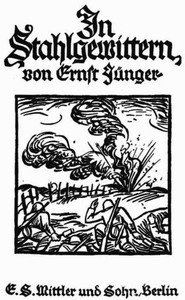
In Stahlgewittern, aus dem Tagebuch eines Stoßtruppführers by Ernst Jünger
Ernst Jünger was just 19 when he volunteered for the German army at the start of World War I. 'In Stahlgewittern' is his day-by-day account of life as an infantry officer, and later a shock troop leader, on the Western Front. He doesn't give us a broad overview of the war; he puts us right in the trench beside him.
The Story
The book follows Jünger from his idealistic enlistment through years of relentless combat. We move with him from one brutal battle to the next—the Somme, Passchendaele, the final German offensives. He describes raids into enemy trenches, long stretches of boredom under shellfire, and the constant, grinding presence of death. The 'story' is the slow accumulation of these experiences. It's less about a traditional plot and more about the transformation of a young man hardened by a world of mud, steel, and blood. He is wounded multiple times, decorated for bravery, and becomes a seasoned, ruthless leader, all while meticulously observing the machinery of war and the men caught in it.
Why You Should Read It
This book will get under your skin. Jünger's style is direct and vivid. He doesn't preach or moralize; he observes. What's so compelling, and often disturbing, is his dual perspective. He records the horror with clear-eyed detail—the shredded bodies, the fear, the futility. Yet, he also writes about the 'storm of steel' with a kind of awe. He finds a terrible grandeur in the spectacle of battle and values the warrior's code, honor, and the primal vitality he feels when surviving. This contradiction is the book's core. It forces you to confront uncomfortable questions about why men fight, what courage really is, and how people adapt to unimaginable violence. It's not a comfortable read, but it's an unforgettable one.
Final Verdict
This is a must-read for anyone interested in World War I or military history, but be warned: it's not a heroic adventure tale. It's for readers who want a primary source that doesn't sugarcoat anything. It's also fascinating for anyone studying the psychology of extreme experience. If you loved the visceral feel of 'All Quiet on the Western Front' but want to see the same war from the 'other side' of the trench, through the eyes of a man who never rejected the warrior ethos, Jünger's diary is essential. Approach it with an open mind, and be prepared to be challenged.
This historical work is free of copyright protections. Distribute this work to help spread literacy.
Donald Rodriguez
3 months agoThis digital copy caught my eye due to its reputation, the footnotes provide extra depth for those who want to dig deeper. It cleared up a lot of the confusion I had previously.
Michael Perez
1 month agoLooking at the bibliography alone, the level of detail in the second half of the book is truly impressive. An excellent example of how quality digital books should be formatted.
Kimberly White
2 years agoHaving followed this topic for years, I can say that the chapter on advanced strategies offers insights I haven't seen elsewhere. A perfect balance of theory and practical advice.
Amanda Martin
11 months agoUsed this for my thesis, incredibly useful.
Christopher Lopez
5 months agoI was particularly interested in the case studies mentioned here, the quality of the diagrams and illustrations (if applicable) is top-notch. Well worth the time invested in reading it.