
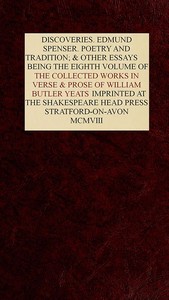
The Collected Works in Verse and Prose of William Butler Yeats, Vol. 8 (of 8)
This isn't a book with a plot in the traditional sense. It's the capstone to a life's work. The Collected Works in Verse and Prose of William Butler Yeats, Vol. 8 gathers his final writings. You'll find his last great poems, like those in Last Poems, where he wrestles with aging, legacy, and a world on the brink of another war. The language is stripped back, powerful, and often brutally honest.
The Story
There's no linear story. Instead, you journey through the final stage of Yeats's artistic evolution. The book is split between poetry and drama. The poems feel like urgent, final statements—clear-eyed looks at love, politics, and the soul. The plays, especially later ones like The Herne's Egg and Purgatory, are where he really lets his imagination run free. They are symbolic, bizarre, and packed with raw energy. Characters grapple with fate, history, and their own twisted desires in stark, almost mythical settings. It's the work of a man who has stopped explaining himself and is just pouring his vision onto the page.
Why You Should Read It
You should read this to see a master refusing to go quietly. The beauty of this volume is in its contradictions. The young Yeats of the Celtic Twilight is gone. In his place is a tougher, weirder, and more compelling voice. The poems in "The Circus Animals' Desertion" admit that the glittering symbols of his youth have faded, leaving only the "foul rag and bone shop of the heart." It's shockingly vulnerable. The plays, meanwhile, show he never lost his theatrical spark. They are challenging, sure, but they crackle with a strange life. Reading this is like watching a great painter's final, boldest strokes.
Final Verdict
This is for the Yeats completist, obviously. But it's also perfect for any reader who wants to see how a true artist ends their career—not with a soft sigh, but with a complex, fiery, and unforgettable bang. If you only know "The Lake Isle of Innisfree," this volume will show you the powerful, turbulent depths he reached by the end. It's a demanding but incredibly rewarding farewell.
This content is free to share and distribute. Use this text in your own projects freely.
George Taylor
2 years agoClear, concise, and incredibly informative.
Donald Garcia
6 months agoThis digital copy caught my eye due to its reputation, the language used is precise without being overly academic or confusing. A solid investment for anyone's personal development.
Donald Hernandez
6 months agoMy first impression was quite positive because the critical analysis of current industry standards is very timely. This should be on the reading list of every serious professional.
Betty Hill
3 months agoRecommended.




Jennifer Hernandez
10 months agoI started reading this with a critical mind, the breakdown of complex theories into digestible segments is masterfully done. This has become my go-to guide for this specific topic.