
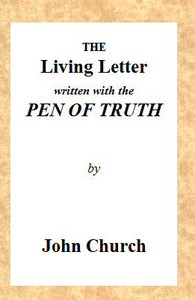
The Living Letter, Written with the Pen of Truth by J. Church
Let's be clear from the start: 'The Living Letter' is not a novel. It's a historical document, a piece of evidence. Published around 1817, it was written by John Church, a controversial preacher in South London. The book exists because Church found himself at the center of a firestorm. He was accused of serious moral misconduct—allegations that threatened to destroy his ministry and his standing in the community.
The Story
The 'story' here is a real-life controversy. The book is Church's public rebuttal. Think of it as a very long, very detailed open letter to the world. He assembles his defense like a lawyer. He includes supportive letters from friends and congregants who vouch for his character. He argues against the claims made by his accusers, pointing out inconsistencies and defending his actions. There's no traditional plot with a beginning, middle, and end. Instead, there's a man, backed into a corner, using every tool he has—his words, his faith, the testimony of others—to push back. The central question hanging over every page is simple: Is he telling the truth?
Why You Should Read It
This book fascinated me because it's so human. Stripped of its old-fashioned language, it's about a crisis we all understand: what do you do when your name is being dragged through the mud? Church's writing is passionate, sometimes defensive, and utterly convinced of his own innocence. Reading it, you feel the high stakes. This wasn't just about theology; it was about his livelihood, his friendships, and his place in society. It offers a raw, unfiltered look at how scandal worked in the early 19th century, long before social media. You see how reputation was defended with pen and paper, and how a religious community could fracture under pressure.
Final Verdict
This is a niche read, but a compelling one. It's perfect for history buffs who love primary sources and getting into the gritty details of past lives. If you're interested in the history of religion, social scandal, or just want to read a real-life drama from another time, give it a look. It's not a light read—the language is of its time—but it's a powerful snapshot of a man fighting for his life's work. You won't find a neat moral here, but you will find a gripping piece of human history.
This masterpiece is free from copyright limitations. You do not need permission to reproduce this work.
Jessica Jones
8 months agoI decided to give this a try based on a colleague's recommendation, the way it handles controversial points with balance is quite professional. Finally, a source that prioritizes accuracy over hype.
Jessica Wilson
2 years agoWhile browsing through various academic sources, the nuanced approach to the central theme was better than I expected. A refreshing and intellectually stimulating read.
Michael Rodriguez
1 year agoInitially, I was looking for a specific answer, but the evidence-based approach makes it a very credible source of information. A mandatory read for anyone in this industry.
Nancy White
2 years agoExactly what I was looking for, thanks!



George Wilson
4 weeks agoHaving followed this topic for years, I can say that the formatting on mobile devices is surprisingly crisp and clear. This has become my go-to guide for this specific topic.