
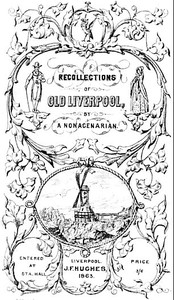
Recollections of Old Liverpool by James Stonehouse
This isn't a novel with a plot in the traditional sense. Think of it more as a long, fascinating conversation with a sharp-eyed old-timer. James Stonehouse, writing in the late 1800s, looks back on the Liverpool of his youth and earlier. He structures his recollections like a series of walks and anecdotes, moving from neighborhood to neighborhood, landmark to landmark.
The Story
Stonehouse acts as our guide, pointing out what used to be where. He describes the old coaching inns, the narrow alleyways, the grand public buildings, and the crowded docks. But the real story is in the people and the everyday life he remembers. He talks about famous local figures, eccentric street vendors, disastrous fires, and public celebrations. He charts the city's physical transformation as railways and new construction erased the old layouts. The 'conflict' here is between memory and progress, between the intimate port town he knew and the booming industrial giant it became.
Why You Should Read It
What makes this book special is Stonehouse's voice. He's not a detached historian; he's a man who clearly loved his city and mourns the parts of it that are gone. His writing is packed with small, telling details that a formal history would miss—the smell of a particular warehouse, the slang used by dockworkers, the taste of ale in a now-demolished pub. You get a real sense of community and character. Reading it, you realize history is made of millions of these ordinary moments, not just kings and battles. It makes the past feel immediate and human.
Final Verdict
This book is perfect for anyone with a curiosity about social history, especially of 19th-century England. It's a must-read for people from Liverpool or with connections to the city—you'll be looking up locations on old maps as you read. But it's also great for anyone who enjoys firsthand accounts and personal memoirs. If you like the idea of history told through stories and atmosphere rather than charts and data, you'll find Stonehouse to be brilliant company. Just be prepared to want to visit a museum or an old pub afterwards to soak up the atmosphere he so vividly creates.
Aiden Torres
1 year agoFrom the very first page, the clarity of the writing makes this accessible. I couldn't put it down.
Charles Jones
1 year agoText is crisp, making it easy to focus.
Melissa Perez
10 months agoSimply put, it provides a comprehensive overview perfect for everyone. One of the best books I've read this year.
Sandra Moore
1 year agoIf you enjoy this genre, the flow of the text seems very fluid. I would gladly recommend this title.





Donald Wilson
3 months agoUsed this for my thesis, incredibly useful.