
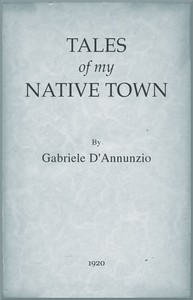
Tales of My Native Town by Gabriele D'Annunzio
Let me set the scene for you. Gabriele D'Annunzio, long before he became a controversial national figure, wrote this love letter to his hometown. 'Tales of My Native Town' is a series of vignettes and character sketches set in and around Pescara, Italy. There's no single, driving plot. Instead, each story acts like a window into a different life at the turn of the 20th century.
The Story
We drift from story to story, meeting a gallery of townsfolk. There's 'The Idolater,' a man consumed by a bizarre, obsessive love. We follow 'Giovanni Episcopo,' a meek clerk crushed by the cruelty of a so-called friend. In 'The Virgin Anna,' we see the suffocating expectations placed on a young woman. Other tales simply capture moments: the grim struggle of fishermen against a storm, the eerie quiet of a holy day, the gossip in the town square. The 'story' is really the life of the town itself—its rhythms, its secrets, and the slow, inevitable erosion of its old ways by new ideas and hardships.
Why You Should Read It
I’ll be honest, this isn't a breezy read. D'Annunzio's style is dense and poetic, sometimes to the point of being lavish. But that's also its power. He makes you feel the place. You can almost taste the salt air and feel the oppressive summer heat. His characters aren't always likable, but they are painfully human—full of yearning, pride, weakness, and quiet despair. Reading it, I was struck by how timeless that central ache is: the fear of being left behind, of your world becoming unrecognizable. It’s a masterclass in mood and setting.
Final Verdict
This book is perfect for readers who love to get lost in atmosphere and exquisite language. Think of it as the literary equivalent of a slow, detailed film. It's for anyone who enjoys authors like Thomas Hardy or Ivan Turgenev, where the setting is a character and social change is the real antagonist. If you need a fast-paced plot, look elsewhere. But if you want to be transported completely to another time and place, to feel the weight of history and human emotion in a forgotten corner of Italy, D'Annunzio’s tales offer a profoundly immersive, if sometimes heavy, experience.
This historical work is free of copyright protections. It serves as a testament to our shared literary heritage.








Lucas Martin
1 year agoPerfect.