
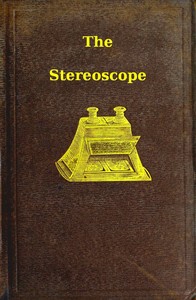
The stereoscope : its history, theory, and construction, with its application…
Forget everything you know about modern 3D movies. This book takes you back to the very beginning, to the 1840s and 50s, when seeing a photograph pop into three dimensions felt like pure magic. Sir David Brewster, the inventor at the heart of the story, doesn't just give you dry instructions. He's on a mission. He wants to set the record straight about who really created the handheld stereoscope that took Victorian parlors by storm.
The Story
The book isn't a novel, but it has a clear narrative drive. Brewster first explains the simple, beautiful problem: our two eyes see the world from slightly different angles, and our brain blends them into one 3D image. He then shows his solution: a clever viewer that presents a slightly different image to each eye, creating an illusion of depth so convincing it feels real. But woven through the science is another thread—his frustration. He argues passionately that his design was the practical, popular one, challenging the earlier work of Charles Wheatstone. The 'plot' is his intellectual defense, making the science feel urgent and personal.
Why You Should Read It
What makes this special is hearing the inventor's voice. You feel Brewster's pride in his creation and his irritation at not getting full credit. It's a front-row seat to the messy birth of a new technology. Beyond the drama, the explanations are wonderfully clear. The detailed engravings of different stereoscope models are like a catalogue of forgotten futures. Reading it, you realize this wasn't just a toy; it was a fundamental discovery about human perception that paved the way for everything from VR to advanced imaging. It connects our modern visual world to its quirky, philosophical origins.
Final Verdict
This is a perfect read for curious minds who love history, science, or technology. It's for anyone who's ever wondered 'how did they think of that?' If you enjoy stories about eccentric inventors, the early days of photography, or seeing how a scientific principle jumps from the lab to the living room, you'll be fascinated. It's not a light beach read, but for the right reader, it's a captivating window into the moment we learned to trick our eyes into seeing a whole new world.
Michelle Williams
1 year agoGreat read!
Elijah Davis
6 months agoUsed this for my thesis, incredibly useful.
Deborah King
1 year agoI didn't expect much, but the emotional weight of the story is balanced perfectly. Exceeded all my expectations.
Joshua Sanchez
1 year agoGreat reference material for my coursework.




Liam Martinez
11 months agoGreat read!