About 123 minutes
Rural Problems of Today — A Reader’s Guide
Customs Everyday Life
28,196 recorded words. 3 minutes difference from this book's estimate.
View Gutenberg source #28365
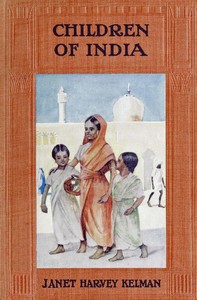
This digital edition of Children of India — Themes and Context is described by source-level measurements including 28,819 words, 2 hr 6 min estimated reading time, and 20 detected text sections.
The text analysis averages about 24.9 words per sentence, while the detected sections provide another way to judge how the source is divided.
Project Gutenberg metadata also associates the work with “India -- Social life and customs,” connecting these edition facts with the source record’s subject description.
Explore this collection
These alternatives are selected using recorded categories and estimated reading time.
About 123 minutes
Customs Everyday Life
28,196 recorded words. 3 minutes difference from this book's estimate.
View Gutenberg source #28365About 84 minutes
Customs Everyday Life
19,229 recorded words. 42 minutes difference from this book's estimate.
View Gutenberg source #16277About 79 minutes
Customs Everyday Life
17,964 recorded words. 47 minutes difference from this book's estimate.
View Gutenberg source #46287Search stored excerpts and compare books → Choose by your preferences →
Choices use stored catalog measurements. Estimates vary with reading speed. A shared category is a catalog label, not a claim that two books have the same argument or literary quality.
Search reads excerpt text stored with this catalog and links to its associated Gutenberg record. The connection is stored in the site database; this tool does not recheck that every excerpt is word-for-word identical to that external record. Excerpt search does not cover every chapter and does not verify historical publication dates.
Catalog snapshot checked: 2026-09-25. Coverage: 100 public books, 100 available source excerpts.
Calculated from edition completeness, EPUB availability, text structure and catalogue metadata. Not a user rating.
Total of 100 points, scaled to a 2.5-5.0 range. Editions with an empty description or a missing EPUB file are not scored.
Public-domain source text
The source text is kept in the dedicated reader, separate from this catalogue record and its commentary.
Kelman opens not with a child but with a cosmology: a lotus flower on an elephant's back, floating on seven seas including one of sugar-cane juice. This mythic frame, drawn from Hindu tradition, sets the tone for a book that moves between ancient stories and contemporary village life. The author explicitly states that custom holds more power than gods or priests, a claim that shapes the ensuing chapters on caste, fate, and daily routines.
The excerpts show a work that is part ethnographic sketch, part Christian instruction. Kelman repeatedly addresses a British child reader, explaining unfamiliar practices while advancing a missionary perspective. Yet the most vivid passages—a vulture snatching a dead fowl during a hymn, boys hiding under a cow—resist easy moralizing and offer glimpses of lived experience.
The first four chapters retell Hindu myths: the world's origin, the Ganges, life and death, and caste. Kelman presents these as stories that rule the lives of Hindu children to-day. She does not dismiss them as falsehoods but treats them as powerful frameworks. The lotus-and-elephant cosmology is described in detail, as are the seven seas—salt, fresh, sugar-cane juice, and others. The author notes that these ideas were formed long before anyone in Britain did, a rare acknowledgment of non-European intellectual history.
However, the excerpts do not show how children themselves engage with these myths. The stories are narrated from an external, explanatory position. The chapter titles suggest a progression from cosmic origins to social structures, but without the full text it is unclear whether Kelman ever lets a child character voice these beliefs.
Chapter X, New Sights in India, offers the most concrete scene. Boys in Holapura climb onto a thatched roof to watch an English missionary. The room below holds women, babies, a cow, goats, chickens—and a streamlet of water across the mud floor. The boys barely listen to the hymn until a vulture swoops through the thatch, snatches a dead fowl, and flies off. The resulting chaos—shouting, a quarrel between two small boys who vanish under the cow—forces the missionary to restart the hymn.
This passage is notable for its sensory detail and its refusal to sentimentalize. The boys are curious but easily distracted; the sacred and the mundane collide. Kelman reports that the children understand little of what they hear for a long time, yet elsewhere a Hindu boy sings Jesus loves me in Telugu, having learned it at school. The book thus records both resistance and absorption.
Throughout the excerpts, Christ is referred to as the King of India, a phrase that recurs in chapter titles and closing remarks. Kelman acknowledges that those who own His sway are only very very few, and she calls for help from other lands. This framing is overtly evangelical, yet it coexists with detailed descriptions of Hindu practices—pilgrimages, fakirs, snake charmers, wayside shrines—that are not merely dismissed.
The catalog subjects list India -- Social life and customs and Children -- India, but the excerpts reveal a work that is as much about religious transformation as about daily life. The balance between ethnographic reporting and missionary appeal varies by chapter. Readers interested in the former will find specific observations; those seeking a straightforward customs survey may be surprised by the theological thread.
The excerpts leave open how Kelman handles the tension between describing a culture and advocating for its change. The book's structure—myths first, then contemporary scenes, then conversion narratives—suggests a deliberate arc, but without the complete text one cannot judge the cumulative effect. Readers should attend to the specific settings and details, which often outrun the author's interpretive frame.
Sitting with Children of India, I think of that vulture breaking the hymn’s quiet—so life intrudes upon sacred calm. It feels like the countryside in Rural Problems of Today — A Reader’s Guide, where ancient ways meet honest, pressing work. Both whisper of homes and fields, touched deeply by change yet holding their old songs close. A gentle kinship, indeed.
Save your reaction, strongest insight, and memorable passage.